
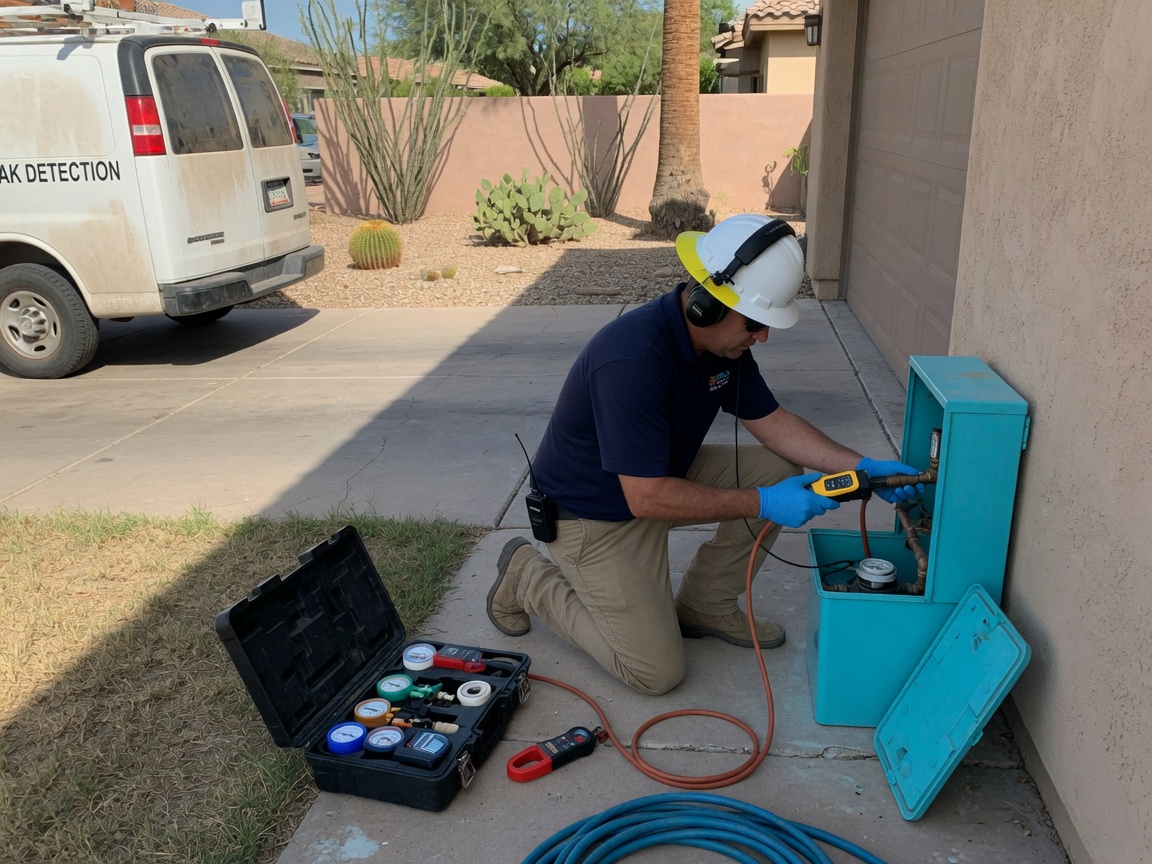
Scottsdale homes built before 1990 in Old Town Scottsdale and Gainey Ranch often have galvanized or polybutylene lines that corrode faster under constant 110-degree summer heat. A small pinhole leak behind tile or under slab can go unnoticed for weeks until it reaches the foundation or ruins drywall. Our technicians use acoustic sensors and thermal imaging calibrated for Maricopa County soil conditions to locate leaks without unnecessary demolition.
Desert temperature swings cause pipes in Paradise Valley and Troon North properties to expand and contract daily, loosening joints that were never designed for extreme heat. We map the entire supply and return lines from the meter through the home, checking for pressure drops that only appear during peak evening usage. This prevents repeat visits when monsoon moisture later saturates already compromised soil around the foundation.
Many Scottsdale Waterfront and McCormick Ranch condominiums share common walls and plumbing chases, so a leak in one unit quickly affects neighbors. We isolate sections with shutoff valves and pressure-test each zone separately before recommending targeted repairs. This approach keeps costs contained and satisfies HOA documentation requirements common in the area.
Technician insight
In Scottsdale the thing that catches most people out with Leak Detection is how fast a small pinhole in galvanized line turns into major slab damage once monsoon moisture hits the already hot, cracked soil around Old Town and McCormick Ranch foundations.
Hidden Slab Leak in Gainey Ranch
Homeowner noticed rising water bill but no visible moisture. Pressure test showed steady drop. Acoustic sensors pinpointed leak under master bath slab. We isolated the line, confirmed location with thermal imaging, and repaired through one access point without removing the entire floor.
Leak Detection Services We Offer
✓Slab Leak Detection
Locates leaks under concrete slabs common in Scottsdale homes using non-invasive acoustic and thermal equipment to avoid unnecessary floor removal.
✓Pipe Leak Detection
Traces leaks in supply lines running through walls and ceilings in neighborhoods like Desert Mountain and Troon North where copper and PEX joints fail from heat cycling.
✓Water Meter Leak Testing
Checks for leaks between the city meter and the home foundation, a frequent issue in older Old Town Scottsdale properties with aging galvanized service lines.
✓Pool and Spa Leak Detection
Identifies leaks in underground pool and spa plumbing lines that lose water quickly in Scottsdale's hot, dry climate.
✓Irrigation Line Leak Detection
Finds hidden leaks in sprinkler and drip systems that waste water and damage landscaping around Scottsdale Fashion Square and Civic Center properties.
Leak Detection Cost in Scottsdale, AZ
| Service | Typical Range | What Affects It |
|---|---|---|
| Basic Pressure Test & Listening | $250–$400 | Single-story homes with accessible shutoffs |
| Slab Leak Detection | $450–$750 | Includes thermal imaging; price rises with multiple zones or thick slabs |
| Irrigation or Pool Line Search | $300–$550 | Depends on yard size and number of valves |
| Multi-Unit or HOA Property Scan | $500–$900 | Requires coordination with shared systems |
Ranges are typical for Scottsdale, AZ and confirmed with an exact written quote before any work starts.
How it works
- 1
Initial Pressure Test
We isolate the water system at the main shutoff and measure static pressure to confirm a leak exists before any equipment is brought inside.
- 2
Zone Isolation
Individual zones are tested separately using existing shutoffs or temporary caps to narrow the search to one section of the home or yard.
- 3
Electronic Listening
Acoustic sensors and ground microphones listen for the distinct sound of water escaping under pressure in slabs or buried lines.
- 4
Thermal Imaging Confirmation
Infrared cameras detect temperature differences caused by evaporating water on hot Scottsdale days, confirming the exact leak location.
Pricing
Most leak detection calls in Scottsdale fall between $250 and $650 depending on how many zones must be isolated and whether slab access is required.