
2026-09-05 ·
Preparing Drains For Monsoon Season In Scottsdale
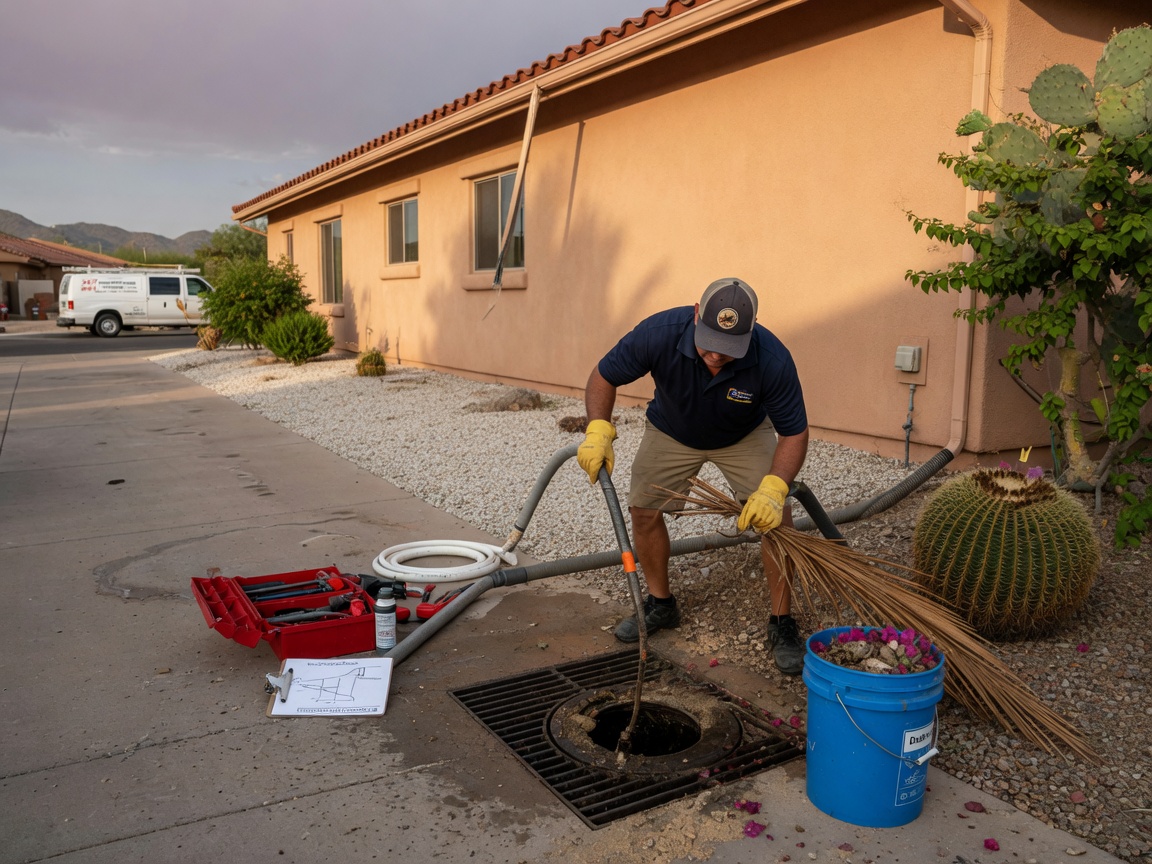
To prepare drains for monsoon season in Scottsdale, start by clearing outdoor grates and scheduling drain cleaning before July rains hit Maricopa County. Sudden downpours drop 1–2 inches in under an hour, sending gravel, palm fronds, and desert dust into lines that already handle hard water scale. Homes in Old Town Scottsdale and Gainey Ranch often see backups within the first two storms because older cast-iron laterals collect sediment faster than newer PVC runs.
How Monsoons Change Drain Performance in Scottsdale
Scottsdale's hot desert climate keeps soil dry and cracked for months, so the first monsoon burst carries loose caliche and decomposed granite straight into storm drains and sewer laterals. Neighborhoods near Camelback Mountain and Troon North sit on steeper slopes where runoff accelerates, pushing larger debris into 4-inch lines. In contrast, flatter sections of Paradise Valley and Tempe see slower water but more standing sediment that settles in traps. These patterns mean a single clogged roof drain or yard inlet can back up into slab plumbing within 30 minutes of heavy rain. Regular inspection of cleanouts before June helps identify partial blockages that monsoon flow will turn into full overflows.
Clearing Outdoor Drains and Inlets Before July
Walk the property perimeter and remove leaves, rocks, and landscape bark from every visible grate, especially around Scottsdale Fashion Square commercial edges and residential cul-de-sacs in Desert Mountain. Use a shop vac or garden hose to flush yard drains while water is still available, before the first storm. Check downspout extensions to ensure they discharge at least 5 feet from the foundation so concentrated flow does not erode soil near sewer lines. In McCormick Ranch communities with shared drainage swales, coordinate with neighbors to clear common inlets that feed multiple homes. These simple steps reduce the volume of material that reaches the main sewer and lowers the chance of interior flooding during the August peak.
Protecting Indoor Lines from Sediment and Roots
Desert tree roots already seek moisture along sewer lines year-round, and monsoon saturation pulls even more roots toward joints. Review the guide on protecting sewer lines from desert tree roots for species common in North Scottsdale. Run cold water while using garbage disposals less during storm watches to keep grease from mixing with incoming silt. If slow drains appear in multiple fixtures, schedule drain cleaning rather than waiting for a backup. Hydrojet service can remove the compacted layer of scale and monsoon sediment that snaking alone often leaves behind, restoring full flow before the next rain cell forms over the McDowell Mountains.
Knowing When Slab or Foundation Issues Appear
Heavy monsoon water can reveal or worsen existing slab leaks in older Scottsdale tract homes built before 1990. If floor drains or toilets begin gurgling during rain, moisture may be entering under the slab through compromised sewer joints. The article on detecting slab leaks under Scottsdale foundations outlines pressure and acoustic checks that pinpoint these problems quickly. Keep interior cleanouts accessible and note any sewage odor after storms, as it often signals a line that needs hydrojet service or spot repair before the next monsoon cycle.
When to Contact 24/7 Emergency Response
If water rises in floor drains or multiple fixtures during a storm, shut off the main water valve and call for 24/7 emergency response. AZ Plumbing Scottsdale serves Scottsdale and nearby surrounding areas including Phoenix, Paradise Valley, and Tempe with technicians familiar with local soil conditions and pipe materials. Early intervention prevents sewage from reaching living spaces and reduces the risk of mold in drywall that monsoon humidity can encourage. Keeping a current map of cleanout locations for each property speeds response when streets begin to flood.