
2026-09-05 ·
Protecting Sewer Lines From Desert Tree Roots
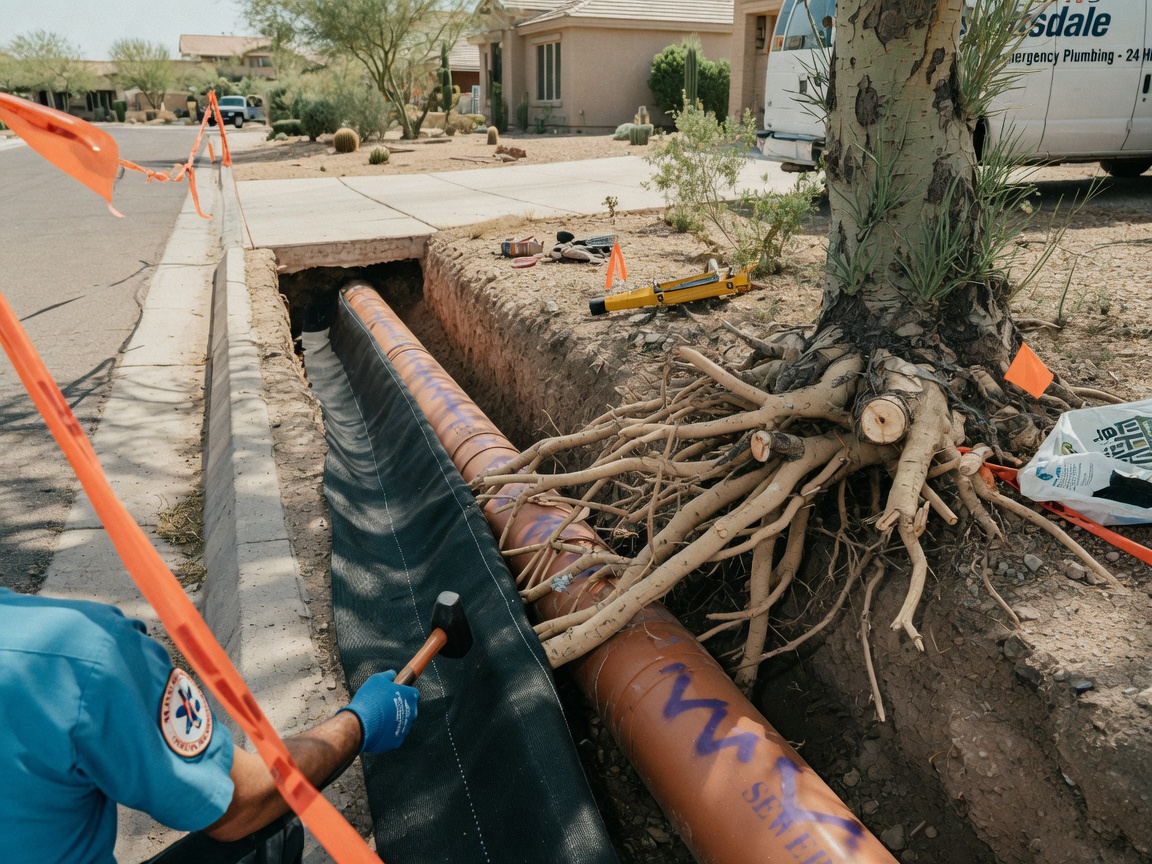
In Scottsdale's hot desert climate, installing root barriers around sewer lines combined with inspections every 24 months prevents intrusions from aggressive trees for 10-15 years in most cases. Homeowners in Old Town Scottsdale and McCormick Ranch face higher risks because many properties built before 1980 still use clay or cast-iron pipes that crack over time. Roots from mesquite and palo verde trees extend 30-50 feet seeking the consistent moisture inside sewer lines, especially during the long dry periods between monsoon rains. This pattern repeats in nearby Paradise Valley and Tempe where similar housing stock and soil conditions exist. Regular checks catch early root hairs before they widen joints and cause backups.
Desert Trees That Target Sewer Lines in North Scottsdale
Mesquite, palo verde, and desert willow commonly grow near homes in Troon North, Desert Mountain, and Gainey Ranch. Their roots travel far in the sandy, low-nutrient soil typical of Maricopa County to reach water sources. In neighborhoods like Old Town Scottsdale, mature trees planted decades ago now sit within 20 feet of sewer laterals, increasing invasion likelihood. Hot summer temperatures above 110 degrees accelerate root growth as trees pull every available drop from underground pipes. Mild winters allow year-round root expansion without frost damage that might slow growth elsewhere. Property owners near Camelback Mountain or Scottsdale Fashion Square often discover roots only after slow drains appear in multiple fixtures.
How Local Soil and Climate Affect Root Intrusion
Scottsdale's compacted desert soil contains caliche layers that force roots to follow the path of least resistance, frequently along buried sewer trenches. The extreme heat drives roots deeper toward cooler, moist pipe exteriors, while occasional monsoon moisture triggers rapid growth spurts. In South Scottsdale and areas bordering Phoenix, older developments with shallow sewer lines experience more frequent issues because roots encounter pipes sooner. Clay soils common around Scottsdale Civic Center retain just enough moisture to sustain root systems once they reach the line. These conditions differ from wetter regions where roots spread more randomly.
Root Barrier Installation and Material Choices
Physical barriers made of 20-mil polyethylene or copper mesh installed in a 3-foot-deep trench around the sewer line stop roots at the source for properties in McCormick Ranch and North Scottsdale. Chemical barriers containing copper sulfate or dichlobenil provide 5-8 years of protection when applied during routine maintenance. Homeowners should avoid planting new trees within 25 feet of sewer lines to reduce future risk. Professional drain cleaning removes early root masses before they compact and block flow. Combining barriers with pipe lining extends protection in older homes where full repiping is not yet needed.
Monitoring and Seasonal Maintenance Practices
Inspect cleanouts twice yearly, once before summer heat peaks and again after monsoon season ends, to spot root activity early. Hydrojet service clears established roots without chemicals that could harm desert landscaping. Watch for signs such as gurgling toilets or slow kitchen drains that indicate partial blockages. Properties in North Scottsdale benefit from video camera inspections every 3 years because tree density is higher. Preparing drains for monsoon season includes checking for root-related weak spots that heavy rains can expose through backups. Consistent records of any slow drainage help technicians target problem sections quickly.
When Professional Assessment Becomes Necessary
Persistent slow drains or recurring backups after basic clearing signal that roots have penetrated joints and require more than surface treatment. Technicians use camera equipment to measure root density and pipe condition before recommending barriers or targeted repairs. Homes near Scottsdale Waterfront or Taliesin West often need customized approaches due to unique lot layouts and mature landscaping. Early intervention prevents sewage backups that can affect entire households during peak summer usage. AZ Plumbing Scottsdale provides 24/7 emergency response for urgent root-related clogs across Scottsdale and surrounding Maricopa County communities.