
2026-09-05 ·
What Causes Low Water Pressure In North Scottsdale
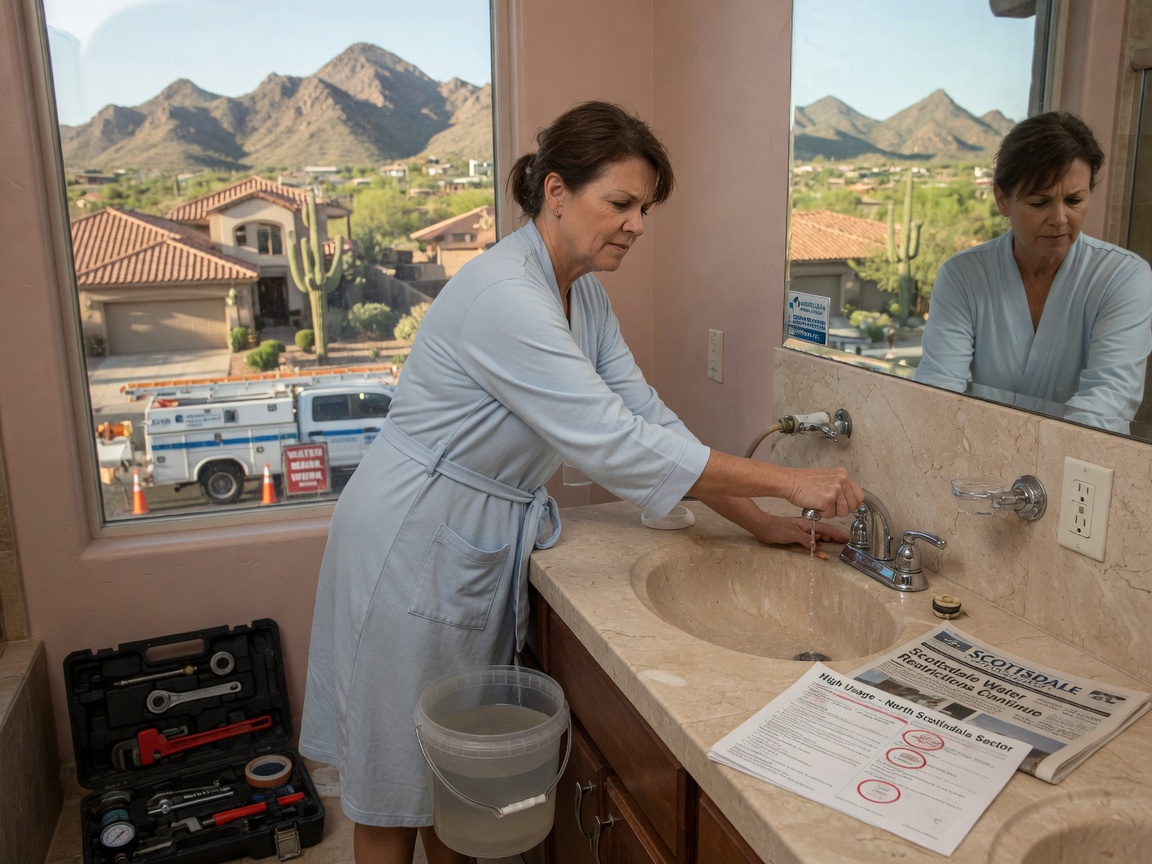
Low water pressure in North Scottsdale typically results from mineral scale buildup inside pipes, corrosion in copper lines installed before the mid-1990s, and small undetected leaks that reduce flow across Maricopa County homes.
Mineral Deposits in Hard Desert Water
Scottsdale's groundwater carries high levels of calcium and magnesium that form scale inside supply lines and fixtures. Over time this restricts flow, especially in homes drawing from the same aquifer that serves Paradise Valley and Tempe. Residents in Gainey Ranch and McCormick Ranch notice the effect first on upper floors where pressure already runs lower. Regular flushing of water heaters and aerators helps, yet severe cases require professional line cleaning to restore full volume. Leak Detection services locate hidden restrictions before they force a full Repipe Service.
Corrosion in Older Copper and Galvanized Lines
Many North Scottsdale properties built in the 1980s and 1990s still contain original copper or galvanized steel that reacts with the local water chemistry. Pinhole leaks and interior rust gradually narrow pipe diameter, cutting pressure at showers and outdoor spigots. Homes near Camelback Mountain and Taliesin West often show this pattern after 25–30 years. Replacing sections with PEX or copper restores flow without disturbing the entire system. Plumbing Repair crews assess pipe condition through camera inspection before recommending targeted fixes.
Small Leaks and Slab Issues Common in the Area
Even minor leaks under slabs or behind walls divert water and drop pressure throughout the house. Desert soil movement around foundations in Desert Mountain and Troon North stresses joints, creating slow drips that go unnoticed until bills rise. These leaks also affect nearby Paradise Valley properties sharing similar construction. Early detection prevents larger failures during summer demand spikes. Detecting Slab Leaks Under Scottsdale Foundations explains signs owners can watch for between service visits.
Pressure Regulators and Municipal Supply Variations
Most North Scottsdale homes have a pressure-reducing valve near the main shutoff that can fail or get clogged with sediment. When the valve sticks, incoming city pressure from the Maricopa County system drops below the 50–60 psi range most fixtures need. Hot summer peaks in Phoenix and Scottsdale increase overall demand, magnifying any regulator weakness. Technicians test at the main and adjust or replace the valve on site to bring pressure back to normal without affecting neighboring homes.
Seasonal Demand and Irrigation Impact
During mild winters, irrigation systems in Old Town Scottsdale and Scottsdale Waterfront run less, but summer heat drives heavy outdoor use that competes with indoor fixtures. North Scottsdale properties with large lots and multiple zones often see pressure fall during peak watering hours. Checking for simultaneous irrigation and indoor use reveals whether the main line or meter can handle combined loads. Adjusting timers or adding a dedicated irrigation loop frequently solves the seasonal drop.